[Chapter 2: The Defeat of the Abstract Queen (Day 58)]
“I lost.”
As I gazed at the bowed head of my opponent, I—Utakata Tsukino—exhaled deeply, as if releasing a breath held for hours.
The weight of an official match always carried a unique tension, but today’s had been especially grueling. Only now did I notice the damp sweat trailing down the back of my neck, a silent testament to the ordeal.
Somehow, I’d pulled through.
Lately, my post-match reflections—nearly ninety percent of them—had settled into this familiar refrain. Not the triumphant thrill of I won, but the weary relief of I didn’t lose or I survived, somehow. The outcome felt less like a clear divide between winners and losers and more like a battlefield strewn with the dead and the gravely wounded.
After trading a few sharp-witted remarks during the post-game analysis, I gathered my belongings and stepped out of the Sendagaya Center Building. Just as I turned toward the station, a sudden tap on my shoulder stopped me.
“Excuse me, you’re Utakata Tsukino-san, right? The women’s Meijin!”
[T/N: Meijin/Shishou = Master.]
The voice was high-pitched and brimming with enthusiasm. Exhausted from the match, I wasn’t exactly eager to engage, but as a women’s professional shogi player—even a minor one—promoting shogi culture was part of my duty. I quickly summoned a practiced smile, slipped into “customer service mode,” and turned to face the speaker—only to regret it instantly.
“Just kidding!”
A finger poked my cheek in a playful, almost Showa-era gesture, and I groaned inwardly.
Right. This person has always been like this.
“…Why are you here, Shishou?”
“Oh, come on, you’re as cold as ever, Tsuku-chan!”
The woman, her tone far too casual for my deadpan expression, was a striking figure in her prime. Tatsumi Marisa. Despite her bold, skin-baring outfit and jangling metal accessories, it was hard to believe she was once a women’s professional shogi player.
“I’ve told you a million times to stop calling me Shishou! I’m not an active player anymore.”
“Oh, right, my apologies, ‘Oba-san’.”
“Yeah, let’s definitely not go with that either. It sounds… wrong.”
The thirty-something woman’s expression turned serious for a moment. I couldn’t resist the obvious retort.
“But, Mari-san, if we’re not master and disciple, then our relationship is that of ‘aunt’ and ‘niece,’ so—”
“Please, just stick with Mari-san, Tsuku-chan.”
“Haah…”
Back in the day, she used to laugh off being called “aunt” or “Shishou.” Things had gotten complicated. By the way, “Tsuku-chan” was a nickname mostly used by my relatives, born from my toddler days when I mangled my own name, “Tsukino,” into “Tsukuno you see, Tsukuno you see.” They say the soul of a three-year-old lasts until a hundred, but I never imagined I’d still be stuck with it at this age.
At the very least, in public, I wished she’d call me “Tsukino” as my master rather than my aunt, but that request had been shot down with a blunt “That’s not cute.” Not cute, huh. I wasn’t about to argue now, so I moved the conversation along.
“It’s rare to see you at the shogi hall, Mari-san.”
“Hm? Oh, I had some business in Sendagaya for my current job. Then I remembered you had a match today, so I thought I’d drop by.”
“I see. Thank you for—”
As I began to bow in gratitude, Mari-san cut me off.
“You’re playing some pretty boring moves, Tsuku-chan.”
“—”
Her words weren’t those of my carefree aunt, Mari-san, but of the Shishou who had taught me everything about shogi. I swallowed hard before responding.
“You… watched it, didn’t you?”
“Well, a bit.”
She waved her smartphone casually, but I turned my paling face away. She didn’t relent.
“Your overly cautious style has always been your thing, and that’s fine in itself.”
“Then…”
“But.”
Mari-san’s gaze turned stern, a rare intensity I hadn’t seen even when she was my master.
“That’s only true if it’s backed by unshakable conviction.”
“……”
Unable to respond, I gripped my left arm tightly with my right hand. Mari-san sighed, her exasperation clear.
“Up until the Women’s Meijin title matches, I had no complaints. Your Tsuku-chan-ness was shining through, and the results proved it.”
“……”
“But after that… your style started to wobble, didn’t it?”
“……”
“……Yes.”
My voice was strained as I admitted it. Perhaps sensing my struggle, Mari-san suggested we head to a nearby café. I nodded, gathering my thoughts as I followed her to the shop.
Once seated and after placing our orders, I opened up again.
“As you said, Mari-san… until recently, I never doubted my playing style.”
“I know. You’ve always called me Shishou, but your style has never resembled mine one bit.”
“That’s partly because you’re too free-spirited…”
“Hahaha! I bet I’m the only women’s pro who’s ever played two pawns five times in official matches!”
“That’s not something to laugh about.”
Back then, she’d faced criticism from both outsiders and those close to her, yet she remained unapologetically herself—someone I both admired and found exasperating.
“Enough about me. Where’s this hesitation of yours coming from, Tsuku-chan?”
“Well…”
Just as I started to explain, my ordered azuki milk latte arrived.
“Huhu~.”
The sight of my favorite Japanese sweet treat briefly melted away my worldly troubles, my eyes sparkling. The waiter, looking slightly puzzled, began placing the extra condiments I’d paid for on the table.
“And here are your fresh milk, honey, maple syrup, and stick sugar.”
“This is most splendid. Thank you very much.”
I bowed politely with a smile. Mari-san chuckled, recalling my catchphrase, “Chou~jou~,” while the waiter responded with a brisk “Enjoy your time here!” before leaving.
[T/N: The term “choujou” (重畳) is a Japanese word often used to express something like “splendid,” “excellent,” or “most satisfactory” in a somewhat formal or old-fashioned tone.]
As I began my usual ritual of adding extra sweetness to my azuki milk, Mari-san prompted, “So?”
“Why has the great prodigy of women’s shogi, Utakata Tsukino, lost her groove?”
I took a sip of my extra-sweet latte before answering.
“Lately, the number of people watching my matches has exploded. And on the internet, people have been saying all sorts of things…”
“Yeah, I’ve seen that. But…”
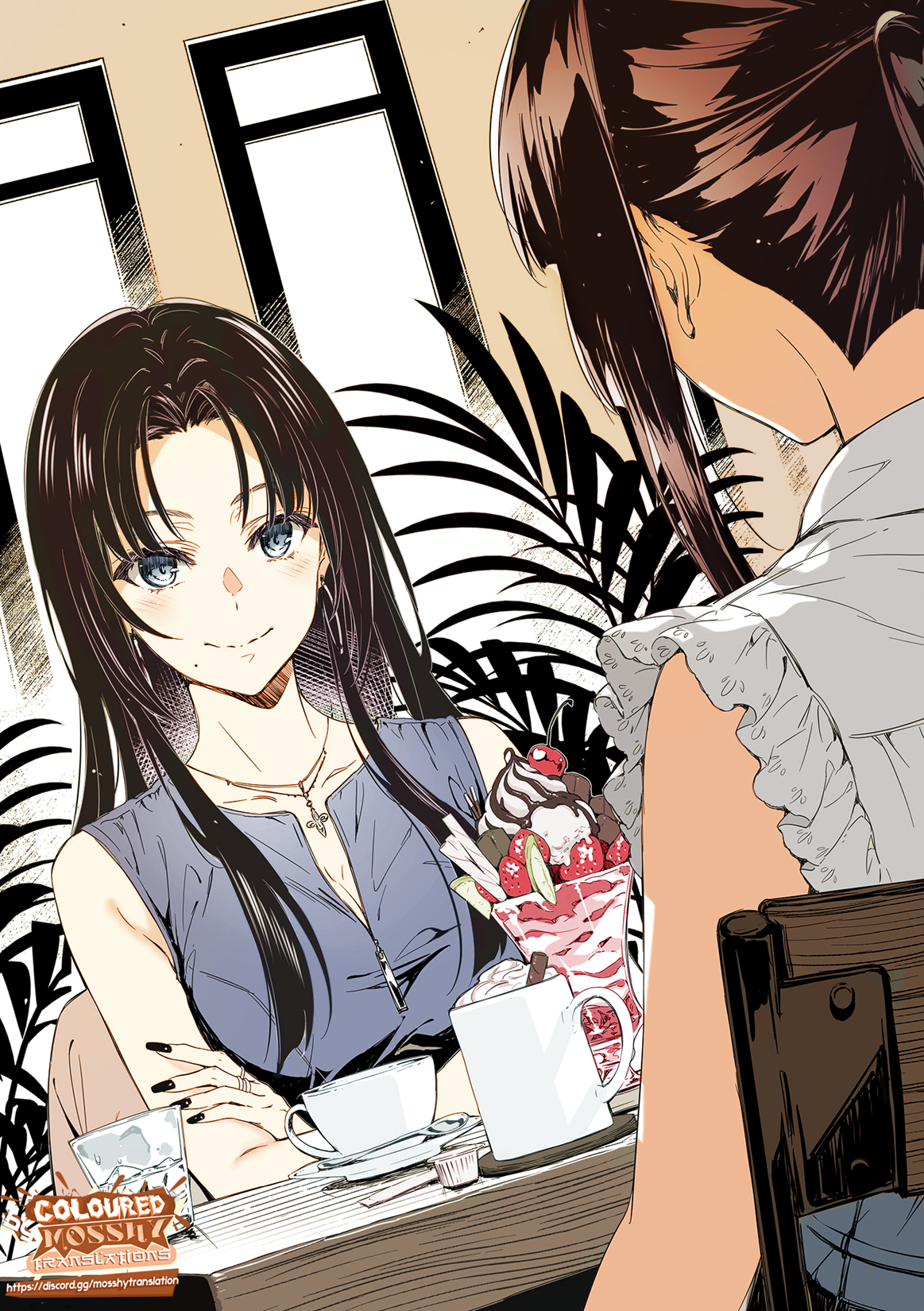
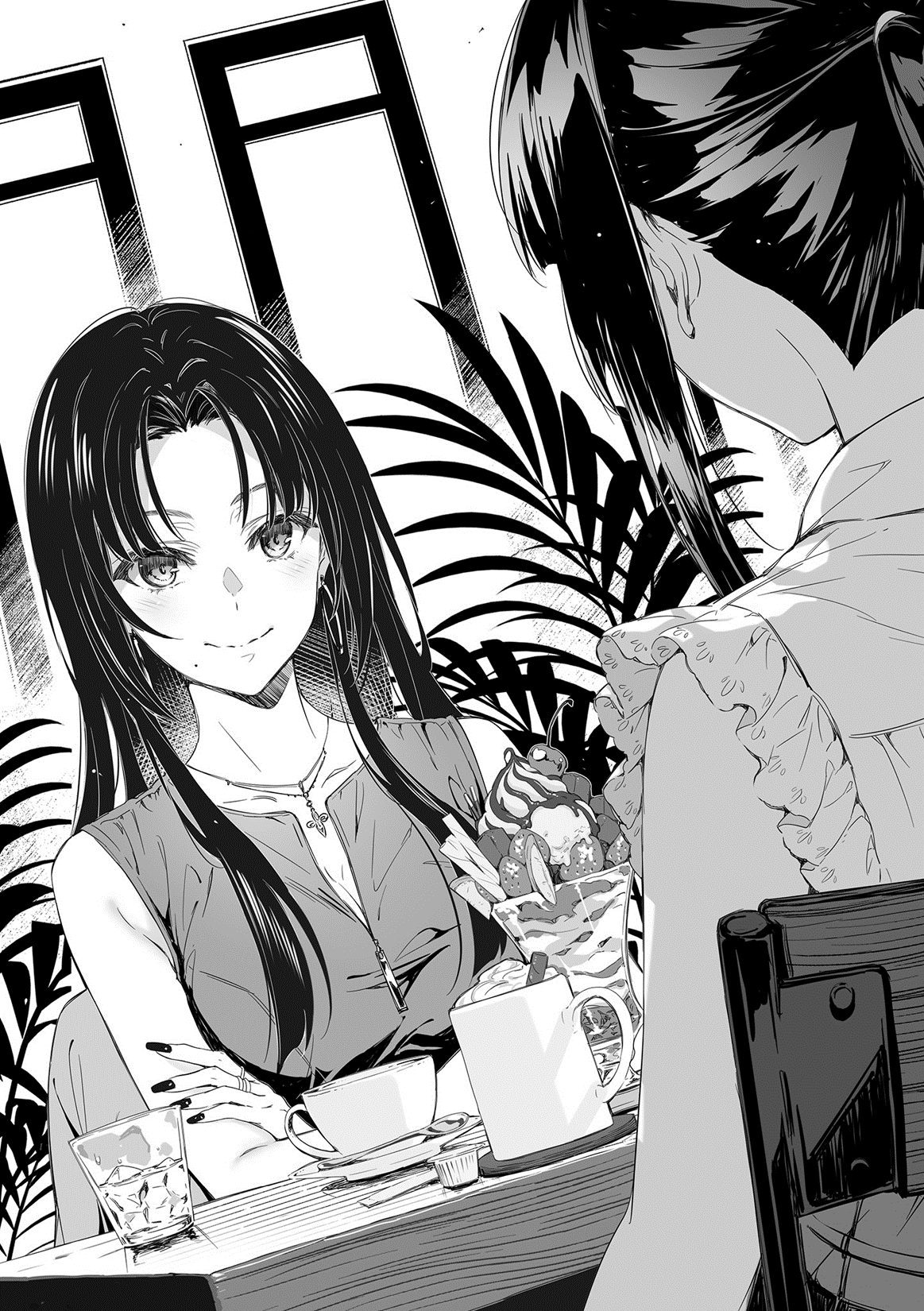
Just then, Mari-san’s order—a “Tropical Big Thunder Parfait” or something equally extravagant—arrived. It was massive. I shot it a sidelong glance.
“That looks like it’d give you heartburn.”
“Oh, you’re the last person who gets to say that.”
She eyed the pile of sweeteners I’d used. To each their own, I suppose.
Mari-san dug boldly into the parfait’s ice cream, making me nervous just watching, and picked up the conversation.
“Tsuku-chan, were you always the type to care about SNS reactions?”
I shook my head firmly.
“Not at all. But even I couldn’t ignore some of the comments.”
“Like what?”
“The suspicion that my playing style resembles… AI, or shogi software.”
“Oh, that kind of thing.”
Mari-san paused her parfait-eating, her expression weary as she groaned.
“That stuff was around even when I was active. Things like cheating accusations involving shogi software.”
“Yes. I’ve been under a bit of that suspicion myself.”
“And? Are you actually doing it?”
“Of course not.”
“Yeah, figured.”
Mari-san gave a knowing nod and resumed devouring her parfait. Her unwavering trust eased my nerves slightly, and I pressed on.
“The accusation itself is baseless, and it didn’t spiral into a major controversy. Truly splendid.”
“That’s good, then. So what’s the problem?”
To her perfectly reasonable question, I let out a heavy sigh.
“The issue is that it made me start thinking about AI in a new way.”
“Oh…”
Mari-san nodded, as if she grasped the weight of my words. I continued.
“I can see why people raised concerns. My style is about relentlessly pursuing optimal moves through layers of calculation.”
“That’s true of every shogi player, though. But in your case, Tsuku-chan, that tendency is especially pronounced. Your strategies barely reflect personal flair or quirks.”
“Yes. And I started wondering if the ultimate form of that approach… might be AI.”
“So you started questioning, Is this really okay for me?”
“I’m ashamed to admit it.”
“You’re so young.”
Mari-san laughed brightly, then quickly added, “Not that I’m old or anything!” in a strange self-correction. Ignoring her one-woman comedy act, I pressed forward.
“As a result, I started searching for what ‘my own style’ might be, and…”
“You ended up becoming a boring player who broke your own mold.”
“Ugh…”
I hung my head. This had always been my problem. I excelled at chasing a “set answer,” but when it came to finding “my own answer,” I was utterly lost. I could finish summer homework on the first day, but “independent research” always left me stumped. That was Utakata Tsukino.
That’s why I’d been drawn to my free-spirited aunt, a women’s shogi pro, and started playing shogi myself. I’d even achieved some results, gained a bit of confidence… only to end up here again.
I was still scraping by with narrow victories, so my record wasn’t in dire straits yet. But if this slump worsened, even that could be at risk. And if I fell apart completely, I had a sinking feeling I’d never climb back up. I’d seen countless players like that in the shogi apprentice school.
I glanced at Mari-san and noticed she’d already polished off her massive parfait. My own azuki milk latte, barely touched beyond a single sip, had gone lukewarm. I felt like crying, though it was still sweet and delicious.
Perhaps sensing my dejected expression, Mari-san softened her tone.
“You’ve always lacked ‘play,’ Tsuku-chan. Just like your mom.”
The embodiment of play itself had the nerve to say that. My face must have betrayed my thoughts, because Mari-san burst out laughing.
“You’re making a face like, The walking embodiment of play is lecturing me!”
“Ugh…!”
She’d hit the nail on the head, and I groaned. Mari-san met my eyes with a serious gaze and continued.
“Of course, being serious and charging straight ahead is one of your strengths, Tsuku-chan. But for vague problems like ‘finding yourself,’ it’s important to broaden your perspective.”
“Broaden my perspective?”
“Yeah. Think about it: when exploring a dark maze, a flashlight is handy, but if you’re searching a field at night, a lantern that lights up a wider area is better, right?”
“!”
Her simple yet piercing analogy struck me. It was exactly my predicament—I was trapped in tunnel vision.
I trembled with awe at the revelation my master had bestowed upon me.
“…Shishou, that’s most splendid.”
“Haha, I’ve received your ‘most splendid’! But it’s Mari-san, not Shishou.”
Though she corrected me, Mari-san suddenly grabbed my hand on the table with a firm grip. Startled, I froze, but her serious gaze held me.
“So, here’s the thing. If you’re thinking about ‘broadening your perspective’ right now, I happen to know of a part-time job that’d be perfect for you… Interested?”
…? Wait, this conversation was veering in a strange direction…
“A… part-time job? Um, by the way, what kind of work are you doing now, Mari-san—”
Just then, her phone vibrated on the table. My eyes caught the message on the lit screen.
〈Usa-kun〉〈I’m here. Where you at?〉
Usa? Who’s that?
It wasn’t someone I knew, but there was no point prying into my aunt’s social circle. Mari-san let go of my hand, grabbed her phone, and snatched the receipt in one swift motion.
“Oh, sorry, Tsuku-chan, I gotta run!”
She stood, hurriedly gathering her things. Stunned, I replied.
“O-Okay, that’s fine, but what about your job…”
“Oh, I’ll tell you the details next time! See ya, Tsuku-chan!”
“Take care…”
With that, Mari-san briskly walked off. But after a few steps, she turned back, flashing a carefree smile.
“Play, Tsuku-chan, play! In the end, the key to life is balancing work and play! Right, Tsuku-chan?”
With that quintessentially Mari-san parting line, my master left.
“Yes! Most splendid, Shishou!”
As I called after her, she paid at the register, talking on the phone as she hurried out of the café.
I still had my azuki milk latte to finish, so I lingered by the window, absentmindedly watching her. She stepped outside, scanning her surroundings while on the phone. It seemed she was meeting someone—maybe a work contact?
As I wondered, she spotted her target and waved. The person she met was—
“…Huh?”
—a blonde boy in a school uniform. And to top it off, she started ruffling his hair as soon as they met, acting oddly familiar. …Wait, what was going on here…?
“…A thirty-something woman who prioritizes ‘play’… being chummy with a young boy…”
……
……I felt like I’d just seen something I really wasn’t supposed to.
……
I quickly tore my gaze from the window and stared blankly at the café’s potted plants.
……
Ah, this azuki milk latte is delicious. Yep, most splendid, most splendid.
*
From Sendagaya, it was a twenty-minute ride on the Sobu Line to Ogikubo Station. I stepped off the train and trudged toward home.
There was a time when I needed a chauffeur to dodge the press, but things had calmed down significantly. Hardly anyone called out to me anymore. The face of an ordinary high school girl who briefly appeared in the news wasn’t exactly memorable.
Still, I took modest precautions—though calling them a disguise might be generous.
I tied my hair up and wore a cap.
It was a stretch to call it a disguise, but it worked surprisingly well. During matches or in front of the press, I always wore my hair down, and the public seemed to associate me with “long black hair.” Hiding it stripped away much of Utakata Tsukino’s distinctiveness.
And so, today, like any other day, I strolled through the Ogikubo Suzuran Street shopping district toward home without interruption.
Not enough play, huh…
Mari-san’s earlier comment echoed in my mind. Setting aside our tea time, heading straight home after a match probably reflected my lack of “play.” Feeling a bit down, I sighed heavily.
On a day like this, I craved sweets… but then I realized I’d forgotten to pick up my “after-dinner treat” for tonight. Worse, I’d run out of my favorite stockpiled sweets at home. I had no choice but to stop by a convenience store, but none on the shortest route home carried my preferred treats.
Guess I’ll take a detour. Let’s see, I think it’s down this alley…
With that thought, I turned onto an unfamiliar path, a refreshing change from my usual routine. Though it was my own neighborhood, this route was outside my daily pattern. There was rarely a reason to come this way… until something caught my eye.
“…A café?”
Nestled among houses and nondescript buildings, an unfamiliar signboard stood out. I stepped closer to inspect it.
“…A board game café?”
It was a place called “Kurumaza,” apparently a board game café. Had it opened recently? With my sweet tooth, I should’ve noticed a new café by now…
“Well, maybe it’s more about board games than food.”
I didn’t fully grasp the concept of a “board game café,” but if it was anything like a manga café, it probably wasn’t a spot for gourmet dining.
I stared at the sign briefly, ready to walk away since it didn’t seem relevant to me—until my aunt’s voice echoed in my mind like a bolt of divine inspiration.
“You’ve always lacked ‘play,’ Tsuku-chan.”
“!”
I froze in my tracks. …Play… I was grateful for my master’s advice, but I hadn’t been able to picture what “play” meant for me. Nightlife, risky ventures, romantic flings—those words associated with “play” felt worlds away. My life had revolved around shogi, and I couldn’t imagine enjoying any of those. But…
“…Board games… huh…”
……
Before I realized it, my feet were carrying me up the stairs to the building.
*
“H-Hello—”
The door, oddly elegant and old-fashioned, suggested a renovated café space. Pushing it open, I stepped into the board game café “Kurumaza” and immediately felt a pang of regret.
The interior was surprisingly tidy, but not a single customer was in sight. A crowded café would’ve been daunting, but an empty one posed its own kind of challenge.
Maybe I should just leave… The thought flickered through my mind, but a voice called out from the back.
“Oh, w-welcome!”
The greeting, laced with clear surprise at a customer’s arrival, was followed by the patter of footsteps as someone—likely a staff member—hurried out.
It was a slender young man, about my age, wearing glasses. His apron’s nameplate read “Tokiwa.”
“Uh, um… no reservation, right? So, er, are you alone?”
Despite working in customer service, he seemed painfully unaccustomed to people, radiating uncertainty. Yet, oddly, his awkwardness made him approachable, especially for someone as nervous as I was. As he fidgeted with the bridge of his glasses, I found myself mirroring him, touching the makeshift disguise glasses I’d slipped on before entering. A brief silence hung between us. …What was this? Were we communicating through our glasses? No, I needed to say something.
“Um, I don’t have a reservation, and I’m alone. Also, I’m completely new to board games. Is that okay?”
I blurted it out quickly, and perhaps sensing my unease, Tokiwa-san shed his awkward demeanor and offered a warm, reassuring smile.
“Of course! In fact, we love beginners. Please, take a seat over here.”
He guided me to a table meant for four. As I set my bag on one of the chairs, Tokiwa-san headed to the counter to fetch water and a damp towel. Watching him absentmindedly, I caught him muttering under his breath.
“Why does she have to be late at a time like this, that gyaru…”
It seemed another staff member was running late. It did feel odd that a café of this size would have just one person working, especially with so few customers.
Tokiwa-san returned with the water and towel and began explaining the café’s system.
“Basically, it works like a regular café. There’s no table charge; as long as you order food or drink, you’re free to play any of the board games in the shop.”
“I see. In that case, I’ll have a gyokuro tea… with sugar and honey, please.”
[T/N: Gyokuro is a green tea with a hearty-sweet umami flavor. With a dew-like aroma, less astringency, and a thick character, this shade-cultivated tea is one for slowly sipping and savoring.]
“Got it—wait, what?”
“Oh, I’m happy to pay extra for the sweeteners if needed.”
“Uh, r-right, understood. Please wait a moment.”
He headed back to the counter. As I casually surveyed the café’s interior, he returned minutes later with my tea and, to my delight, a tray brimming with sweeteners.
“Here’s your gyokuro tea. Um, feel free to use the stick sugar and honey as you like.”
“Wow, thank you so much! Most splendid, most splendid.”
“Chou…?”
Tokiwa-san tilted his head in confusion as I happily began adding stick sugar and honey to my gyokuro, striking up small talk.
“By the way, how long has this place been open?”
“Only about two months, so the staff, including me, are still getting the hang of things…”
“I see. Are you always working alone?”
“No, no, it’s usually two of us part-timers, and sometimes the manager’s here too, but…”
He let out a heavy sigh.
“The manager’s often out, and today, even my partner’s running late…”
“That sounds… pretty tough.”
It seemed like a challenging work environment. Feeling a bit guilty for monopolizing his attention, I hesitated.
“Um, I know it’s a bit late to ask, but is it okay that I came alone?”
I worried the café was meant for groups borrowing tables and games together. Sensing my concern, Tokiwa-san flashed another warm smile.
“Absolutely, we love solo customers! You can play with staff like me, join other customers, or even try some solo-play games.”
“Oh, then today…”
“If it’s alright with you, I’d be happy to explain the games or play with you. How does that sound?”
“Yes, that’s most splendid.”
“Choujou…”
“Oh, I mean, please, I’d appreciate it.”
“Got it. In that case, I, Tokiwa, will be your opponent today. Oh, and your name is…?”
“I’m Uta—”
I nearly slipped into my usual introduction but caught myself. It wasn’t that I distrusted Tokiwa-san, but after the effort of my light disguise, revealing my real name felt awkward. I pivoted quickly.
“Uta—call me Utamaru.”
“Like the rapper?”
It was a terrible spur-of-the-moment pseudonym. I could’ve done better. Mortified, I wanted to disappear, but Tokiwa-san, after his quip, gave a kind smile.
“But I like it, ‘Utamaru’-san. It’s really easy to say. Oh, and please call me ‘Banjo’ instead of Tokiwa.”
“Huh?”
Noticing my confusion, he scratched his cheek sheepishly.
“It’s like my nickname here at the café. Tokiwa flipped around becomes Banjo. Pretty simplistic, right?”
[T/N: 常盤, “Tokiwa,” when flipped to 盤常, reads as “Banjo”]
“N-No, not at all…”
“But, you know, when you’re playing games—digital or analog—doesn’t a nickname or handle feel more natural?”
“Oh? Yeah… you might be right.”
For me, using my real name conjured images of “official matches.” In that sense, he was right—“Utamaru” felt like just the right distance.
Banjo-san regarded me with a calm, gentle smile as I regained my composure. …Yeah.
He’s one of those genuinely good people, for better or worse.
Despite his awkwardness with people, he was keenly attuned to my anxiety, offering clumsy but heartfelt kindness that shone through clearly.
In the competitive world, he’d likely struggle to survive. To Utakata Tsukino, the women’s shogi pro, he seemed almost fragile.
But to just plain Utakata Tsukino—
“(So, Tsukino-chan, is shogi fun?)”
A memory of my mother playing “Dobutsu Shogi” with me as a child flickered through my mind.
I relaxed my shoulders, letting a natural smile spread from deep within.
“I’m looking forward to this, Banjo-san.”
“Great, Utamaru-san.”
We exchanged greetings, our smiles mirroring each other. Banjo-san tilted his head slightly.
“So, Utamaru-san, do you have any specific board games you’d like to try?”
“Specific games…?”
Sensing my uncertainty, he elaborated with a gentle tone.
“Oh, it’s not complicated. For example, beginners often ask for things like ‘I want some luck involved,’ or ‘something that sparks conversation,’ or ‘nothing too brain-intensive.’”
“I see. In that case, my preference would be…”
I spoke from the heart, letting my true instincts slip out.
“I like a battlefield where luck is eliminated, and you silently pit your wits against each other in a fight to the death.”
“Are you a military strategist or something?”
Banjo-san’s expression faltered, clearly taken aback. Oops. My shogi obsession had slipped through too much. I was here to learn about “play,” after all. I hurried to backtrack.
“B-But, I’m here to open new doors, so rather than sticking strictly to my preferences, something a bit different would actually be most splendid…”
“Got it, understood. In that case…”
Banjo-san crossed the room to a shelf brimming with board games and returned with a box roughly the size of a monthly manga magazine.
“How about ‘Splendor’?”
I had no frame of reference, but he anticipated that and continued.
“Splendor is a game that uses cards and chips representing various gems.”
He opened the box, revealing cards and chips for me to inspect. The chips felt surprisingly hefty, their quality catching me off guard. Well-made components matter. In shogi, magnetic boards or online platforms have their place, but a proper board and pieces ground you, deepening your focus.
Banjo-san went on.
“I’ll save the details for later, but basically, you use these chips as currency to buy cards and earn points.”
He pointed out key elements with care.
“However, both the chips and cards are taken from a shared pool, so…”
“I see, that’s where the strategy and competition come in. Like vying for the chips and cards you both want.”
“Exactly! You catch on quick, Utamaru-san.”
His genuine admiration carried a hint of flattery, but it felt sincere, and I couldn’t help but smile, pleased.
Banjo-san continued, his excitement growing.
“By the way, this game has a ‘reserve’ mechanic, like making a reservation in real-world shopping. It’s for when there’s a card you really want but don’t have the funds for yet and don’t want anyone else to snag.”
He emphasized the “basic” part, and after a moment’s thought, I voiced a realization.
“So, conversely, you could strategically reserve a card your opponent wants to block them from getting it.”
“Yes, yes! Exactly! That’s it! You’re amazing, Utamaru-san!”
Banjo-san’s earlier awkwardness vanished as he practically bounced with enthusiasm. For some reason, my quick grasp thrilled him. What a strange guy. But I got it—I’m the same way with shogi.
Smiling at his energy, I listened as he continued.
“This isn’t unique to Splendor, but in board games, moves that hinder your opponent are often called a ‘cut.’ It’s a key tactic, especially in two-player games like this one, where it’s more prominent because…”
As a women’s shogi pro, I didn’t need him to finish. I jumped in.
“In a two-player game, hindering your opponent directly benefits you, so it’s something to actively pursue. But in games with three or more players, you have to be cautious. If you focus too much on blocking one person, it might benefit a third party.”
“Wow…”
Banjo-san’s eyes sparkled as if I were some divine strategist. I flinched. What’s with this guy? Does he usually deal with people that slow?
Noticing my reaction, he cleared his throat, reining in his enthusiasm.
“So, this game is almost entirely strategy-based with minimal luck—about ten percent, due to the timing of when cards appear. It’s not a conversation-heavy game, but it doesn’t demand silence either. What do you think?”
It was exactly half a step removed from my stated preferences.
I smiled back.
“It sounds fun. I’d love to try it.”
“Great! Let’s do it!”
Beaming like a kid, Banjo-san began setting up with infectious excitement. He must really love board games. His smile was so bright it lifted my spirits too. But…
“By the way, Banjo-san, are you good at this game?”
“Well, I suppose so. Since it’s my job, I’ve played it with a lot of customers, so I’ve got some experience. And honestly, this game does reward knowledge quite a bit…”
“Knowledge of standard strategies directly impacts strength in board games, doesn’t it?”
“Exactly! By the way, Utamaru-san, you throw out some pretty old-school phrases sometimes.”
As he set up, Banjo-san tossed out a line with his usual smile—one I couldn’t let slide.
“Oh, but don’t worry. Since it’s your first time, I won’t go too hardcore.”
It was a considerate approach for a board game newbie.
But for Utakata Tsukino, a women’s shogi pro who’d clawed her way through the competitive world, it was like stepping on a tiger’s tail.
My smile held steady as I gently pushed back.
“Are you saying… you’re going to go easy on me?”
“Huh? Oh, no, not exactly going easy, uh, I mean…”
Banjo-san fumbled, pausing his preparations. I pressed on, my smile unwavering.
“Please, don’t hold back on my account. I’d like you to give it your all.”
“Uh, but like I said earlier, this game really favors experience, so…”
“Banjo-san.”
“Y-Yes?”
“Your all, please.”
My serious gaze met his, and after a moment of looking utterly lost, he swallowed hard and relented.
“…If that’s what you want.”
“Most splendid.”
I smiled brightly. A match, no matter the kind, is best taken seriously. Still, to ease the slight tension, I tossed in a playful jab.
“Hehe, don’t feel too bad if I end up winning, Banjo-san.”
“Haha, you’re talking big, Utamaru-san!”
Banjo-san laughed, his tone refreshing. …I felt a twinge of guilt for such a nice guy, but this was a competition, even if just for fun. I wasn’t about to lose. Quietly, I stoked my inner fire.
After Banjo-san’s detailed explanation of the rules, I confirmed that luck played an even smaller role than I’d expected. I swiftly organized the game’s key points and winning strategies in my mind.
This is fun. Formulating strategies outside shogi felt incredibly fresh.
But that freshness made me overconfident. I was already convinced I couldn’t lose.
“Shall we begin, Utamaru-san?”
“Yes, please.”
I bowed deeply, as if starting a shogi match. Banjo-san, slightly taken aback, smiled and said, “Well, that’s polite,” before returning a bow. Yup, definitely a good guy. But…
“(I’m sorry, but that smile of yours will be clouded over in a matter of minutes.)”
This was now a battlefield. With both of us drawing our blades, there was no room for holding back.
Once the game began, I attacked with the ferocity of a raging fire. I wielded the “reserve system,” the game’s linchpin, to devastating effect, earning Banjo-san’s praise—“Utamaru-san, you really catch on quick!”—while relentlessly blocking his moves. Meanwhile, I steadily built my position, carving a path to what I believed was an unassailable victory. And then, twenty-three minutes later—
“I lost.”
The words slipped from my lips, bitter and laced with regret, as if I were conceding a shogi match.
—From my mouth.
……
Wait, what!?
I stared at the game board—the cards strewn across the table—in utter disbelief, my mind racing to replay the game. Banjo-san, with a wry smile, tried to console me.
“That was amazing, Utamaru-san! For your first game, your strategy was incredibly advanced…”
“But I lost, me.”
“W-Well, it’s a board game, so sometimes it’s just the luck of the draw…”
“You said earlier that luck only accounts for about ten percent of this game.”
“Uh, y-yeah, well… that ten percent just happened to work in my favor this time…”
“Banjo-san.”
I cut him off, lifting my gaze to meet his directly.
“A victor’s humility can sometimes feel like an insult to the defeated.”
“……”
My intensity left Banjo-san momentarily speechless, his expression turning solemn. Then, I snapped out of it.
“(Why am I spouting such nonsense in a ‘playful’ match?)”
My face flushed with embarrassment. The shock of losing, despite my seriousness, had rattled me, letting my raw competitive self slip through. How mortifying.
I hurried to apologize.
“Oh, um, I’m sorry, that was—”
“…You’re right.”
“Huh?”
Banjo-san nodded to himself, as if struck by a profound realization.
“When Takanashi-san gloats, it’s kind of annoying, but it’s also refreshing in a way.”
“Takanashi-san?”
Who was that? I tilted my head, puzzled, and Banjo-san met my gaze squarely.
“Thank you, Utamaru-san. Your comment was really insightful.”
“Uh, no, I mean…”
As I floundered, he flashed an awkward peace sign and declared,
“So, I won at ‘Splendor’! Y-Yay, victory! Victory!”
His smile and stiff finger movements were almost comically forced. I couldn’t help but burst out laughing.
“What was that, Banjo-san?”
“S-Sorry. I’m still figuring out how to express my joy…”
Muttering something about how “Takanashi-san is definitely not a role model,” Banjo-san reflected quietly. …He was such a funny, kind person. And in many ways, someone I could learn from.
Not just in personality, but also in a certain sense of “play style.”
His strategy was brilliant. The way he accounted for that slight element of luck was clearly superior. It’s a mindset shogi doesn’t have, and it’s so refreshing.
A dormant part of my brain felt sparked to life. This might really be it—the “play” my master said I lacked was right here.
Perhaps sensing my frustration, Banjo-san made a suggestion.
“How about we call that a practice round and go for another game?”
It was tempting, but…
“No, thank you, I’ll pass for now.”
“Oh, did you not enjoy it?”
“No, it’s not that. It was so fun that I want to try something else…”
I gave a shy smile as I continued.
“I want to play more with you.”
Realizing how that sounded, I felt a flush of embarrassment—it was almost like a personal confession. But Banjo-san…
“That’s great!”
His response was pure, unfiltered excitement, his eyes sparkling without a hint of embarrassment.
“Board games are so much fun, right?”
“Huh?”
My words had carried a touch of personal fondness, but he took it purely as enthusiasm for board games, thrilled that a new customer had discovered their charm.
I giggled at his earnest demeanor and nodded.
“Yeah, they’re fun… I think I could come to love them.”
“That’s the spirit!”
Banjo-san beamed with genuine joy. As he swiftly cleared away “Splendor,” he checked with me.
“By the way, Utamaru-san, how much time do you have today?”
“Oh, um, about an hour and a half.”
“Got it. Shall we pick out a few shorter games, then?”
“Please do. Oh, can I take a look at the shelf with you?”
“Of course, absolutely!”
Standing side by side with the gleeful Banjo-san, I scanned the board game shelf. I still had no idea what was what, but when a box’s art or title caught my eye, he eagerly explained its contents concisely, as if saying, Good eye! Some games required five or more players or took “half a day” to play, completely unsuitable for my needs. Still, he never dismissed any game outright, instead highlighting its appeal to pique my interest before wrapping up with, “Let’s play it next time.”
As someone dedicated to promoting shogi, I couldn’t help but admire his polished explanatory skills.
“Your explanations are all so clear and concise, Banjo-san. It’s amazing.”
“Huh?”
He looked surprised at my praise, then gave a sheepish smile.
“I’m glad you think so, but… it’s probably thanks to my coworker.”
“Your coworker?”
“Yeah. She’s late today, unfortunately, but… how do I put it? She’s someone who’s completely uninterested in board games.”
“What? Even though she works at a board game café?”
“Yup, even though she works at a board game café.”
He continued with a wry smile, his expression still gentle.
“Trying to explain board games to her naturally forced me to refine my approach.”
“Refine…?”
“Keep it concise, emphasize the positive points, avoid complicated jargon, and only go into details once they’re hooked. That kind of thing.”
“I see.”
He’d gained valuable skills from this job… though it was a bit concerning that they were honed on a coworker rather than customers. Still, it was a good story. I thanked him.
“That’s a very insightful story. Much appreciated.”
“Appreciated, huh?”
Banjo-san reacted to my odd word choice, then asked casually.
“You have a unique way of phrasing things, don’t you, Utamaru-san?”
“Oh, sorry. It’s a habit, or rather, something from my environment…”
It was less about shogi and more about my aunt playfully drilling these phrases into me as a kid.
Banjo-san smiled back.
“No, I just think it’s cool how those phrases come so naturally to you. And we’re probably not that far apart in age.”
“Oh, I’m seventeen.”
“Then we’re the same age!”
Banjo-san’s grin widened, caught up in the lively rhythm of our chat. Swept along, I let a careless remark slip out.
“Guess it’s pretty impressive, working here while still in high school…”
“Ah, actually,” Banjo-san shook his head, a touch of awkwardness in his voice. “I’m actually not in high school right now.”
“Oh…”
Regret hit me instantly. It wasn’t like me to blunder like that, but the conversation’s flow had lulled me into a trap. So careless.
As I winced, Banjo-san hurried to smooth things over. “B-but don’t sweat it! I chose to drop out, so…!”
“Oh, so you’re chasing some big dream, then…?”
“N-not exactly.”
Strike two. I was way too careless today.
Mentally clutching my head, I barely registered Banjo-san’s next words. “A-anyway, it was a choice I was fine with…”
“R-right, of course! It’s not like you dropped out because of some big problem or anything!”
“Well, it was… kind of after some pretty intense trouble…”
Strike three. In baseball, I’d be out. I just wanted to vanish.
Burying my face in my hands—not just in my mind but for real this time—Banjo-san offered an apologetic smile. “Uhm. Ahaha, that was bad, wasn’t it? I’ve still got a lot to learn.”
“Huh?”
“Y’know, those tips for explaining board games—keep it short, keep it upbeat. I totally fumbled that just now.”
“Oh…”
“If Takanashi-san were here, she’d tear me a new one. Close call.”
“Banjo-san…”
His lighthearted tone eased the knot in my chest. He went on, his kindness unmistakable. “Anyway, I’ll save my ‘Crushing Dropout Episode: Hellish Quagmire Edition~’ for another time.”
“What’s with that title? Now I’m really curious!”
“Hehe, right? Sorry, though—that tale’s exclusive for customers who swing by ten times.”
“What a savvy businessman!”
Banjo-san’s playful laugh lifted my spirits, his warmth pulling me back from my embarrassment. I couldn’t help but feel rescued by his easygoing charm.
Clearing his throat, he steered us back on track. “So, ready for the next board game, Utamaru-san?”
“Oh, right, yes.”
I’d nearly forgotten. With a teasing grin, Banjo-san prodded me. “Your wounds from that loss must’ve healed by now, right?”
“You’re on!”
I shot back, my tone brimming with defiance. “Next time—no, I won’t lose again. I’m actually really good at this stuff.”
“Haha, that’s intimidating. Guess I’ll have to bring my A-game to keep up.”
“Most splendid. From here on, I’ll win every match and shatter that confidence of yours, Banjo-san.”
I huffed, determination flaring. Armed with what I’d learned from the first game, I felt unstoppable. Almost felt bad for Banjo-san, but for the sake of my pride, I’d dominate from here on out.
Aah, how pitiable, thou gentle and noble sir, Lord Banjo.
—And yet, an hour and a half later, after diving back into the games, there I was—utterly crushed in every single match, my confidence in tatters.
…… Hooooowww??
“It’s about time to wrap up, I think.”
“Huh? Oh, yes…”
Prompted, I stood, my head swirling with question marks.
……Wait. Hadn’t I just claimed the Women’s Meijin title not long ago? Didn’t I come here fresh off narrowly beating a skilled women’s shogi pro today? And yet, total defeat?
“……”
“That’ll be 1,100 yen for two drinks.”
Snapping back, I realized I was already at the register. Still dazed, I mumbled, “…Um, I’ll pay with PayPay.”
“Got it.”
I held my phone to the small reader Banjo-san offered. The cheerful electronic chime felt oddly jarring today. After the payment, he gave the standard line.
“We look forward to your next visit.”
“Eh? Aah, right, yes. I’ll have to come back for revenge.”
“Y-yeah.”
Banjo-san’s reply was a bit awkward. Meanwhile, I glanced at my phone’s balance and clutched my head for a whole new reason. That said, I don’t exactly have the cash to hit up cafés every day…
As an average high school girl, my allowance was modest. My shogi earnings? Fully managed by my parents. Sure, shogi-related expenses were covered as “business costs,” so I’d never been strapped for cash before. But claiming board game café visits as “business expenses” to my parents? No way I had the guts for that.
With my allowance, even once a week might be a stretch…
I started mentally crunching numbers. Banjo-san, perhaps misreading my expression, suddenly bowed. “Um, I’m really sorry about today.”
“Huh?”
“Well… you’re such a natural, Utamaru-san. The way you picked up the rules was like striking a bell and hearing it ring. As a board gamer, I got so pumped—outside my job, y’know—that…”
He scratched his cheek, sheepish. “I totally forgot to hold back… I was a complete failure as a staff member.”
He went on, genuinely ashamed, muttering about wanting to crawl into a hole. To be fair, a board game café staffer crushing a customer in every match was a bit much. It might indeed count as a staff fail. But…
I chuckled softly. “I was happy, you know. That you went all out and faced me seriously, beyond just your job. Thank you—it was really fun.”
“Utamaru-san…”
Banjo-san’s relief was palpable. He didn’t carry himself like a typical “staff member”—not a whiff of business in his vibe. For me, that was… refreshing. Maybe that’s why.
Before I could stop myself, I let slip more than I meant to. “Besides, I really admire people who take what they love seriously.”
“Huh?”
“Huh?”
…Seeing Banjo-san’s blank reaction, I freeze up too.
A few seconds later… my cheeks start burning. What am I even saying? Telling a guy my age, face-to-face, that I admire his personality so openly…!
“Oh, no, I mean, that’s not—”
I floundered, desperate to backtrack, but then the entrance chime jingled in. Someone had arrived.
“Oh, welco—oh, just you, Takanashi-san,” Banjo-san said, his tone shifting noticeably.
“Ugh, way to kill the vibe,” the new arrival—a cute high school girl with peach-colored hair—pouted, her cheeks puffed out adorably. “You could at least keep up, the act, Banjo. Like, ‘Welcome back, Master!’”
“We don’t do that kind of service here.”
“Huh? I totally do it sometimes. For the vibes.”
“Please don’t rewrite the café’s whole vibe on a whim…” Banjo-san sighed, glancing at me. “Also, we’re still serving an actual customer here.”
His eyes flicked my way. I’d already paid and was ready to leave, so introductions weren’t needed, but I gave a polite bow anyway.
“I’m Utamaru.”
“Whoa, like Rakugo? That’s some god-tier naming sense,” Takanashi-san said, her reference catching me off guard with its niche flair. I managed a vague smile as she leaned in closer.
“I’m Takanashi Mifuru. Nice to meet ya, Uta-chan!”
“P-Pleased to meet you, Takanashi-san.”
“Oh, and sorry, Uta-chan. I was late.”
“Huh?”
“I mean, ‘cause of me, a cute girl like you had to play alone with this cheesy nerd.”
“Who’re you calling a cheesy nerd?” Banjo-san shot back.
“Okay, Banjo, what’s your favorite Sukiya menu item?”
“Cheese gyudon.”
“You’re literally a cheesy nerd. Hilarious.”
“Don’t laugh! And aren’t you apologizing to the wrong person, you gyaru?”
“Ugh, shut up, Banjo. You’re so annoying, gross, hopeless.”
“That’s excessive self-defense with the comebacks!”
What was I even witnessing? Barely a minute since Takanashi-san burst in, and their rapid-fire banter was already dizzying. I forced a polite smile, edging toward the exit.
“Well, I’ll be going now…”
Banjo-san hurriedly saw me off. “Oh, um, we’ve got tons of other fun board games, so if you’re interested, come back anytime!”
“Y-Yes. If I have the time and money, I’ll definitely…” I hedged, my tight budget making me vague as I started to leave.
But Takanashi-san, with her carefree boldness, tossed out another topic like I wasn’t halfway out the door. “So, what games did you and Banjo play today, and who won how many times?”
“Oh? Uh, well…” I faltered.
Banjo-san shifted awkwardly. I let out a breath, plastered on a business smile, and answered. “Embarrassingly, we played about five games, and I lost them all. Well, I’ll be going—”
“What? For real? That’s hilarious. Uta-chan, you’re way too weak! lol”
“…Excuse me?”
I stop in my tracks.
“H-Hey, Takanashi-san!” Banjo-san jumped in, sensing my irritation, but Takanashi-san barreled on, oblivious.
“No, but like, Banjo’s super weak at board games, right? And you lost every time? lol”
“Weak? Banjo-san?” I couldn’t let that slide. Stunned, I stared at him. He shot Takanashi-san an annoyed glare before explaining with a sigh.
“Well, against her—Takanashi-san—my win rate’s pretty low, yeah.”
“Heh!” Takanashi-san puffed out her chest proudly.
But Banjo-san quickly added, “That’s because I usually hold back. Listen, Utamaru-san, this girl’s the opposite of you—she gets mad if I go all out.”
Gaining momentum, he slipped into full venting mode. “And she abuses ‘take-backs’ like crazy! We let it slide ‘cause she’s a beginner, but then she pulls off these ridiculous dice rolls and obliterates everyone! So it’s not like I’m actually weak…”
“Haha, nerd excuses are so lame! Oh, wait, Uta-chan’s even weaker, right? lol”
Takanashi-san’s cackling grated on me.
……
Unable to take her mockery, I gripped the door handle, my expression strained.
“Utamaru-san! I-I’m sorry, Takanashi-san was…” Banjo-san stammered.
“Aw, Uta-chan, you’re leaving already? I wanted to play a round with you!” Takanashi-san chirped, oblivious.
I turned back, flashing my best business smile at both of them. Before I could stop myself, I blurted out something that completely ignored my financial situation.
“Then, it’d be most splendid to have a rematch at this time ‘tomorrow’—with both of you.”
*
In conclusion, for the next three weeks, I kept losing to these two.
Not only did I lose “normally” to Banjo-san, just like on the first day, but Takanashi Mifuru was an absolute nightmare. As Banjo-san had warned, she leaned heavily on “take-backs” and sheer luck—a kind of strength so alien to shogi that I couldn’t counter it. My personality wouldn’t let me stoop to using “take-backs” against her.
Worse, while I demanded Banjo-san go all out against me, Takanashi-san enforced the opposite—a “no going all out” rule for him. So Banjo-san became her “gyaru’s familiar,” assisting Takanashi-san while targeting me. Naturally, in three-player games, she dominated nearly every time.
Oddly, though, it wasn’t frustrating. In fact, for pure “game enjoyment,” Takanashi-san’s presence made things better. She was naturally suited for “play”—cheering when she won, sulking when she lost, keeping the table lively. My complete opposite, she was the perfect opponent for a “break from shogi.”
Still, I cherished the one-on-one matches with Banjo-san, like that first day. Spending a quiet weekend afternoon sipping delicious tea, engaging in intellectual games with him, felt like a treasure—a reminder of when I first fell in love with shogi.
…Though, of course, that includes the part where I lose and feel utterly crushed.
I did win occasionally, thanks to luck or quirks of the game. Those victories fired me up, leaving me satisfied, thinking, That’s enough café visits for a while.
But at night, soaking in the bath, Banjo-san’s face would inexplicably drift into my mind. Then I’d feel, Something tells me this isn’t a complete victory.
In the world of “professionals,” not just shogi, long-term “win rates” matter most. I was no exception. A single “lucky win” against Banjo-san didn’t mean my skill surpassed his—that was my stance.
By the time I climbed out of the bath, a fresh flame of determination for the next victory would ignite in my chest. So I’d show up at the café the next day, get thoroughly trounced as expected, and fuel my drive even more—a vicious cycle.
And so, my visits to the board game café became a full-blown habit.
Then, one day during checkout, a piercing comment hit me out of nowhere.
“Uta-chan, are you, like, some kind of pro or something?”
“Wha—?”
For a moment, I paled, thinking my identity as Utakata Tsukino, the women’s shogi pro, had been exposed. But Takanashi-san meant something else.
“I mean, I know it’s weird for a staff member to say, but you’re spending a ton here, right? Coming, like, four times a week. So I figured you’ve got some serious income.”
“Oh, that’s what you meant.”
She hadn’t sniffed out my shogi pro status, but she was sharp. This girl was unpredictable in every way. Just the other day, she’d tried to snatch my disguise cap, saying, “Uta-chan, you’d be cuter without that, y’know?”
I brushed off her spending comment with a vague excuse. “Well, pro or not, I do a decently paying part-time job.”
But that was a misstep. The moment I mentioned a “decently paying job,” Takanashi-san’s eyes sparkled, and she pounced. “Whoa, for real?! What’s that? Hook me up—”
Before she could finish, Banjo-san, who’d been listening nearby, called out to the back with a deadpan tone. “Manager, Takanashi-san says she wants to quit!”
“Hey, hold up, Banjo! No, no, Manager, I love this place—” Takanashi-san scurried to the back in a panic.
Most splendid. I finished paying and slipped out quietly.
A heavy sigh escaped me as I checked my digital wallet balance after walking a short distance from the café. Takanashi-san’s comment had struck a nerve.
As a women’s shogi pro, my earnings were managed by my parents, leaving me with the modest finances of an average high school girl. Visiting the board game café four times a week was a brutal expense—far too brutal. I was burning through my saved-up allowance at an alarming rate.
On top of that, the time commitment wasn’t trivial. As a shogi pro, I was already cutting into my study hours to make these café visits.
Yet, so far, it hadn’t been a problem. In fact, it might even be a net positive for me right now. Thanks to the sharp insight of my aunt and master, Mari-san, my shogi performance had been climbing since I started going to the café to learn “play.” Some online articles even claimed I’d “fully regained my form.”
I wasn’t entirely sure what was driving this upswing, but my mental state was undeniably better. The hours I once spent agonizing over shogi slumps, grasping for answers, were now filled with plotting how to outmaneuver Banjo-san—leaving aside the wildly unpredictable Takanashi-san.
My drive for victory hadn’t wavered, but scheming to “play” against Banjo-san sparked excitement, warmed my heart, and even helped me sleep better. My mom had noticed, saying, “You’ve been looking healthier lately,” which was a relief. Truly most splendid.
In other words, my café visits were, for now, boosting even my professional life.
…Except for the financial strain.
“(What to do…)”
The obvious fix would be to explain my situation to my parents and ask for a bigger allowance, but in our household, that was unthinkable. Why? Because…
“(My parents have an astonishing allergy to “games.”)”
They weren’t bad parents by any stretch, but when it came to “games”—digital or analog—they’d always been fiercely restrictive. My mom, especially, was unbending on this.
It all traced back to an old incident involving my mom and her younger sister, Mari-san, over shogi. As a child, my mom attended a local shogi class, where her natural diligence helped her improve rapidly. Within a year, she was pegged as a promising candidate for going pro.
Then Mari-san, who joined the class on a whim because she was “bored with no fun games around,” crushed my mom on just her third day. That devastating loss shattered my mom’s passion for shogi—and her interest in “games” altogether.
After that, my mom quit shogi entirely, while the carefree Mari-san, with a casual “Shogi’s kinda fun, huh?” attitude, went on to become a women’s shogi pro.
……
Yeah, no wonder she hated games.
It was a heartbreaking story every time I heard it, especially since my mom, despite her pain, wholeheartedly supported Mari-san’s career and now backed my own shogi journey with equal fervor. She was just too good a person.
When I was a kid, inspired by my aunt’s shogi prowess, my mom went out of her way to buy “Dobutsu Shogi” and played it with me “for fun.” As a young child, I had no clue about her past, but what a cruel thing I’d unknowingly put her through. I still felt guilty. To think she played shogi with me, smiling, without ever hinting at her painful history—her love was overwhelming.
That’s why I wanted to respect my mom’s stance on keeping her distance from games and “play” as much as possible. So, no matter how tight my finances were—
“Yo, Mom, I’m hitting up a board game café to play my heart out, so gimme some cash!”
—There was no way I could say that. What kind of ungrateful daughter would I be? That’d be downright devilish!
Asking my parents for more allowance was completely off the table.
That left secretly getting a part-time job as my only option…
“(But where am I supposed to find the time for that?)”
I was already sacrificing shogi study time for the café. Adding work hours on top was impossible.
Takanashi-san’s earlier comment flickered through my mind. “A well-paying job, huh…”
If only such a thing existed, I’d be the one begging for an introduction. A job with minimal hours, high pay, and no risk of exposing my identity as a shogi pro.
As I indulged in that fantasy, my phone buzzed. To my surprise, it was a call from my master—Mari-san.
“Hello?”
〈Hey, Tsuku-chan? It’s me. Have you thought about what we talked about last time?〉
“? Last time? Uh, what was that? Oh, you mean your advice about needing more play?”
〈No, not that. By the way, you’ve been doing great lately, Tsuku-chan. Your play style’s gotten more flexible.〉
“Oh, thank you. Yes, thanks to you, I found a great way to ‘play’…”
〈That’s awesome. But today’s not about that—it’s the other thing.〉
“The other thing? Uh, was there something else?”
All I could recall from our last talk was the “play” advice. Sensing my confusion, Mari-san’s tone turned exasperated.
〈So cold, Tsuku-chan. Don’t you remember? Right before we parted at the café, I made you an important offer.〉
“An offer before we parted? Uh…”
Her words stirred a faint memory. Right, she’d grabbed my hand and pitched something odd. I’d brushed it off, too focused on the “play” advice. If I recalled, it was…
As if to nudge my memory, Mari-san delivered a dramatic checkmate, her voice brimming with the flair of her shogi pro days.
〈So, Tsuku-chan, you interested in a well-paying part-time job?〉
*
The next day, I arrived at the place Mari-san specified, only to freeze in shock, my mouth agape.
“This is…”
It was in my hometown of Ogikubo, the same nondescript building I’d been frequenting—the one housing the board game café “Kurumaza” on the fourth floor.
I double-checked my phone’s map app, but there was no mistake. This was it. Ogikubo Interaction Building, fifth floor.
To think Mari-san’s company was right above Kurumaza…
Neither my mom nor I knew much about Mari-san’s current job beyond her being a “president” and “pretty busy,” but I had no idea her office was so close to home.
After a moment’s hesitation, I took the elevator to the fifth floor. For some reason, climbing the stairs past Kurumaza’s entrance felt awkward, even though I wasn’t doing anything wrong.
Stepping out, I noticed the fifth floor differed from the fourth, which Kurumaza occupied entirely. This floor was split into three or so rooms: a tax accountant’s office, a private investigation agency, and—my destination—a company.
Rollworker, a staffing agency.
I took a deep breath before the plain, utilitarian door, its simple font displaying the company name. …It was strange how different the vibe was from Kurumaza’s playful atmosphere, though Kurumaza was probably the odd one out. I recalled Takanashi-san mentioning she’d decorated it herself on a whim.
I pressed the intercom. Immediately, a voice called from inside, “Yeah, yeah, it’s open!”
“Pardon me,” I said, stepping in, a touch nervous.
The interior was exactly what I’d expect from a small office in a nondescript building. A long table, likely for meetings or receptions, sat in the center, surrounded by four desk chairs. At the back was a business desk, presumably for the president, where Mari-san sat. No other employees were around.
Noticing me, Mari-san peeked from behind her computer monitor, her smile warm and welcoming. “Glad you came, Tsuku-chan!”
“Yes, Shishou.”
“Mari-san, please. Oh, or, in here, ‘Shachou.’”
[T/N: Shachou = President.]
She stood and approached me. I glanced around the modest room and murmured, “Shachou…”
“Yup, Shachou. So, what do you think of my company?”
“Well, it’s hard to say…”
The office wasn’t particularly impressive, nor was it obviously flawed. I struggled to find the right words, but one thing caught my eye.
“Um, what’s that…?”
In the far right corner, a blue backdrop stood out, paired with what looked like filming equipment and, oddly, a changing booth like you’d see in a clothing store. For a small office, it took up a surprising amount of space.
Mari-san answered casually. “Oh, that’s for taking profile photos or the occasional video.”
“Photos or videos…?”
I swallowed hard. My mom’s worries about “Marisa doing something shady” echoed in my mind, and they suddenly felt all too real. A nondescript building, a vague job, no visible employees, a mysterious filming booth, a “staffing agency” that sounded suspiciously convenient, and…
“(The other day, she was awfully chummy with that blonde high school boy, wasn’t she…?)”
I narrow my eyes, staring at Mari-san intently.
“(Getting lured in by the words ‘well-paying job’ might’ve been a mistake.)”
Regret crept in. I should just brush this off and head home. As I glanced at Mari-san, her grin suggested she’d read my every thought.
“Tsuku-chan, you’re thinking my job’s shady, aren’t you?”
“Ngh. N-No, not at all…” I stammered, looking away.
She laughed brightly. “You’re right. It’s a bit too gray to tell your mom about.”
“Huh?”
“That said,” she added with a playful wink, “it’s not so rotten that I can’t face you or the heavens.”
“Mari-san…”
Her familiar attitude eased my tension. That’s right—she’d always been like this. Free-spirited, yes, but with a clear line she never crossed. That’s why my mom and I had always been close to her.
Smiling with relief, I asked, “So, what exactly is your job, Mari-san…?”
“Aah, right. To put it simply…” She puffed out her chest, her smile unashamed. “It’s a business renting out young guys!”
“Ah, I need to stop by the police station on my way home.”
“Wait, wait, wait, wait!” My aunt frantically grabbed her niece, who was ready to bolt to the authorities.
Meeting my cold, familial-bond-shattering glare, my master—no, Tatsumi Marisa (age 29)—pleads tearfully.
“It’s not like that! I’m not doing anything illegal!”
“I see, so it’s a job that cleverly slips through legal loopholes. As expected of my master—quite clever.”
“The way you say it! N-No, that’s not…” Scratching her head in frustration, she turned on a wall-mounted TV and played a video from a DVR.
It was a street interview—seemingly ordinary, but not quite. The interviewee, a high school boy, spouted hilariously quirky remarks, making the studio celebrities crack up. It was part of a variety show segment.
After watching, I realized something. “Wait, is this high school boy…?”
“Yup, one of our dispatched kids.”
“Oh, so that’s what you meant by renting out young guys…”
I apologized for the misunderstanding but pressed on. “So, it’s like a talent agency or an extra dispatching company, right? Why not just say so…?”
“Well, that’s where the gray part comes in,” she said, scratching her head awkwardly. “From the interview, you can tell we can’t advertise those kids as ‘extras’ or ‘actors.’”
“Right, because it’s supposed to look like a random street interview.”
“Exactly. But their personality and stories are real—no lies there. It’s just…”
“The ‘randomly on the street’ part is the big lie, right?”
“Yup, that’s it.” She gave a wry smile.
I nodded. It wasn’t illegal, but it was definitely something my ultra-serious mom wouldn’t stomach.
Mari-san elaborated. “We also dispatch people to fill out events or signings, handle simple flash mobs, or accompany someone to a restaurant that requires multiple people to book.”
“Yeah… that’s definitely ‘staffing.’ A bit gray, but…” I chuckled, recalling her shogi style. “It’s very you, Shishou. Your bold, unconventional piece-handling was always your signature.”
“Thanks, Tsuku-chan. Oh, but don’t tell your mom, okay?”
“Hehe, I know.”
It was a bit gray, but not antisocial. With a clearer picture of her work, I asked, “So, what’s this part-time job you want me to do?”
“Right, right. It’s a well-paying, super easy job, perfect for someone as busy as you, Tsuku-chan.”
“Oh, that’s most splendid. I’ve been looking for exactly that kind of job.”
“Hehe, perfect then. The job I want you to do is…” She paused dramatically. “Rent-a-boyfriend.”
“Oh, I need to swing by Bungei Shunju on my way home.”
[T/N: Bungei Shunju is a Japanese monthly magazine based in Tokyo, Japan.]
“Wait, wait, wait! That’s worse than the police station!” Mari-san yelped.
“Why does my job suddenly sound way shadier?!”
“No, no, it’s not like that! Rent-a-boyfriend doesn’t mean anything sexual.”
“Obviously! Even so, I’m still saying no!”
“Why?”
“Why…?!” I faltered. …… ……W-wait, why, exactly?
Mari-san pounced on my hesitation. “I called it ‘rent-a-boyfriend’ for convenience, but it’s different from what most people imagine.”
“…What do you mean?”
“You’re probably thinking it’s like going on a date for a day, faking a romance for money—like sugar-daddy stuff, right?”
“Well… yeah. So, yours is different?”
“Yup. It’s like the interviews or event staffing. It’s not about fake romance—it’s about being a ‘sakura’ boyfriend. In other words…” She paused for effect, then declared passionately, “It’s a boyfriend rental for showing off to others, for social clout!”
“Is that something to declare so proudly?!”
I retorted, and Mari-san shrugged with an exasperated sigh. “Tsuku-chan, everyone has moments when they need a cool partner to show off.”
“What’s with this unprecedented persuasiveness?”
She cleared her throat. “So, it’s not as shady as it sounds. A lot of the work involves providing material for SNS posts.”
“Oh, like posting date photos?”
“Exactly. It’s basically being a ‘boyfriend extra.’ No physical intimacy, of course. We thoroughly verify identities upfront, and if it involves going somewhere far, we partner with the detective agency next door to keep things safe. Here’s the time commitment and pay.”
She showed me figures on her phone. My eyes widened. “T-this is quite splendid, to say the least…”
The pay was downright lucrative, and if it was just taking photos, the time commitment was minimal.
As I considered it, Mari-san added, “Recently, one of the kids handling our rent-a-boyfriend gigs left. It’s one of our flagship services, so we urgently need a replacement. We’re willing to sweeten the pay and hours a bit.”
“I see, so that’s why the conditions are so splendid…”
“Yup. And since it’s this kind of job, you can use a stage name to keep your identity hidden.”
It was perfect for me. But there was still a hitch. “But, Mari-san, this is ‘rent-a-boyfriend,’ right? Not a girlfriend.”
“Obviously. I wouldn’t lend my adorable niece out to some random guy.”
Yet you’re fine lending me out to random women… But I let that slide. “You want me to play a guy?”
Sure, a role detached from “Utakata Tsukino” would help, but…
“Yup. It’s fine—you’re not just beautiful, Tsuku-chan, you’ve got a handsome face too.”
Is that something I should be happy about? As I pondered, she continued. “Plus, you’re good at disguises, aren’t you?”
“Good? I mean, I can change my vibe pretty easily. Especially my hair—just tying it up changes my whole look.”
The fact that I hadn’t been recognized as “Utakata Tsukino” at the café was proof.
“Exactly! That’s the key!” Mari-san rushed to the back with an excited huff, returning with something in hand.
“Here it is! We bought this for the previous guy, but he never used it.”
“A blonde wig…?” I muttered, taking it instinctively.
Mari-san urged me to try it on, so I reluctantly headed to the mirror. “The last guy dyed his own hair instead because it was less hassle. He liked it, so that was fine, but this wig was left unused, so it’s perfect for you.”
“The blonde previous guy…” I recalled seeing Mari-san with a blonde high school boy last time. If he was the “previous guy,” I’d be taking over his role—and maybe his stage name? I think it was…
“Oh, that looks great!” Mari-san exclaimed.
I’d finished putting on the wig. In the mirror, a blonde, strikingly handsome young man stared back. I couldn’t help but marvel. “Wow… this is me—?”
“There, ‘I’ would sound more fitting for the vibe, don’t you think?”
Fair point. I cleared my throat, lowered my voice, and tried again. “…This is I?”
“Excellent!” Mari-san clapped enthusiastically.
It was a bit much, but I wasn’t mad. I’d always been someone whose vibe shifted with a hairstyle, but this wig made slipping into a new persona effortless. It was oddly thrilling.
Mari-san swooned with approval. “Just as I thought. You pull off the cross-dressing way too well, Tsuku-chan. You’re ready to jump right in!”
She slapped my back with a loud thwack, sealing the job contract without waiting for my reply. “Alright, it’s settled. Welcome aboard as our flagship rent-a-boyfriend—”
Addressing me—now transformed into a sharp, blonde pretty boy—she bestowed the name I’d heard before.
“—Usa Itsuki-kun.”


